Sandeep P Gaonkar
Most things
I started had
no name.
I am Sandeep P Gaonkar.
I’m building Pass Down, a place where families can add what they own, share it with the people they choose, and pass it down when the time comes.
Before this, I started a few things. Some never had a name. Others taught me more than I expected and eventually led me to a question I couldn't leave alone.
This is how I got here.
The first time I tried to make something
Lesson learnt
When the work gets bigger than your hands can handle, find a better way to do it.
At LBHS, my school in Davanagere, we had to wear plain white shirts on Wednesday and Saturday. No logo on them.
In first-year PU at Nutana PU College, three friends and I set out to change that. Kiran, Darshan, Goutam and I stamped the school logo on the shirts by hand, with a wooden block.
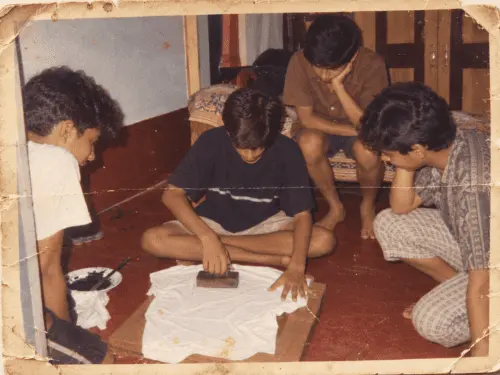

One school was manageable. More was not. So we found a printer in Hubli, took orders from schools in Davanagere, and carried the shirts back and forth by train. In two years we did this for about eight schools.
We never gave the business a name. It was pocket money, a way to spend our time, and an experiment that grew a little bigger than we expected. After second PU we all went our own ways, and I went to Ranebennur for engineering.
Still no name
Lesson learnt
Put the right people in charge, and it keeps running without you.
I studied engineering at STJIT, Ranebennur. The college was on the outskirts of town, and the canteen served only vegetarian food, so students would make the trip into town just for a cup of tea and snacks.
Across the road stood an empty shed. I rented it, and Chandru and his wife came in to cook and run it. We started with tea and egg omelettes.
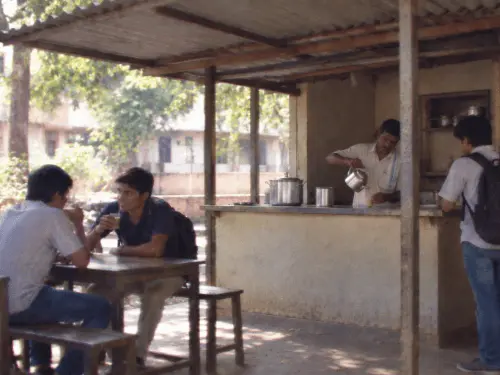

I never named the place. The students did. They called it the Egg Shed.
When I left Ranebennur in 2012, Chandru and his wife kept the shed going.
We called it Moltz
Lesson learnt
Learn the rules before you start, and find someone who has done it before.
In 2013 I came to Bangalore and joined Pipeco, where I worked closely with Bharat Devji Thakkar, my first mentor. Then I moved to Thattva Innovations, a hardware security and software firm.
Outside every hospital I saw the same juice stalls. For a patient, that was the only choice, and it was mostly sugar. My mother used to make me a drink from millets. My friend Rudresh and I turned her recipe into Moltz: millets and six seeds, one flavour for adults and one for kids. We had it tested in a lab and took the results to doctors.
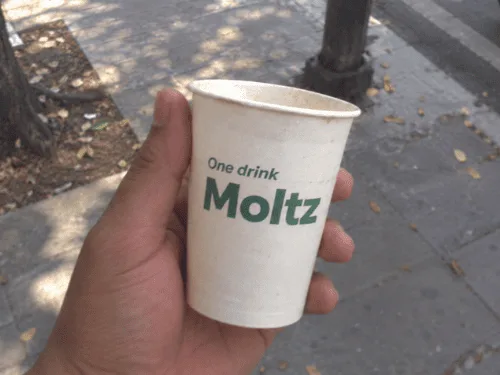
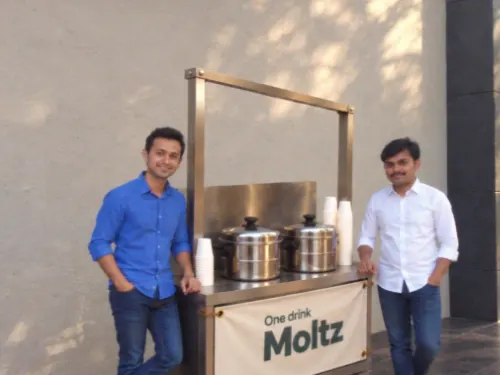
We ran two hand carts outside hospitals, starting with Jayadeva. Two helpers ran them through the day. Rudresh and I both had jobs, so we took over after seven every night.
We had no registered company and no food licence. Startups were new, licences were hard to get, and there was no one to guide us. By the time we understood what we needed, it was too late.
We gave the carts to the two helpers, and they started something of their own.
Learning to build products
Lesson learnt
A product is only good if an ordinary person finds it easy to use.
After Moltz, I went back to building things for others.
At Cumulations I looked after business development and product for connected devices: the app on your phone that talks to an IoT device.
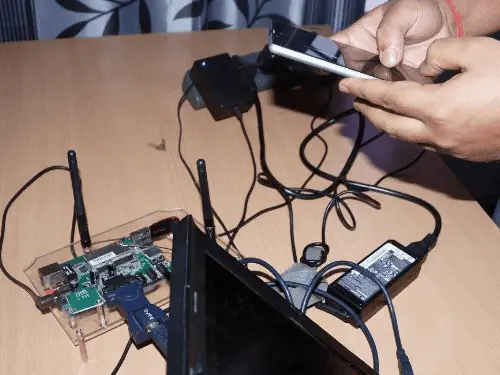
We worked on some challenging projects: the Davek umbrella, ToneTag, Autowiz, SenseGiz, Mihtra Wellness and Intel.
Most of what I learned there came from the founders, Madhu, Praveen and Pradeep. It was the first time I had people to learn from.
I understood how a product moves from an idea to something people can actually use, and how many decisions sit behind what looks simple on a screen.
Weekends in the hills
What it gave me
I went for the hills. I came back with friends and clients.
For almost five years, alongside my job, I spent most weekends taking groups trekking: Kunti Betta near Bangalore, and Brahmagiri in Coorg. I planned the route, the transport and the food. A few cafes in the city helped spread the word.
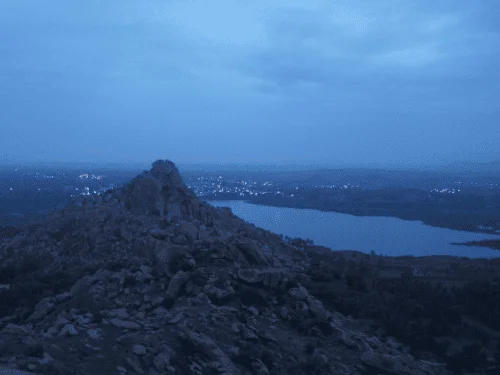
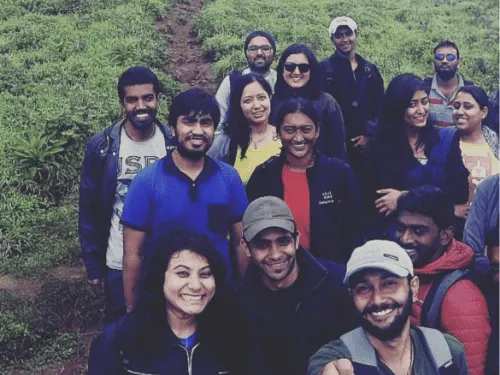
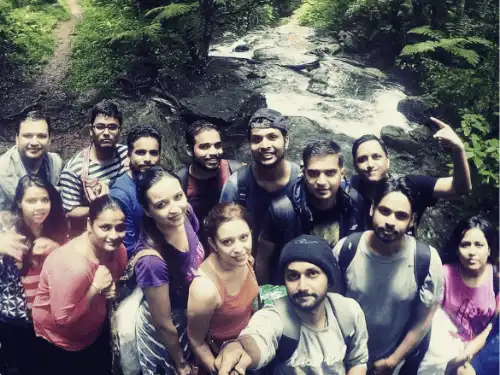
A usual group was 12 to 18 people, most of them strangers to each other at the start. When a company came as a team, it was 25 or 30. It was where I learned to keep a group going when the climb got hard.
It was how I got out of the city. Some of the people I met on those trails later became Logicwall’s first clients.
Helping founders
Lesson learnt
Solving the problem is not enough. The business has to earn while it helps.
Some of the people on those treks had an idea and no team to build it.
In 2017 I started Logicwall for people like them. We built web and mobile apps and tried to put a first working version in their hands quickly.
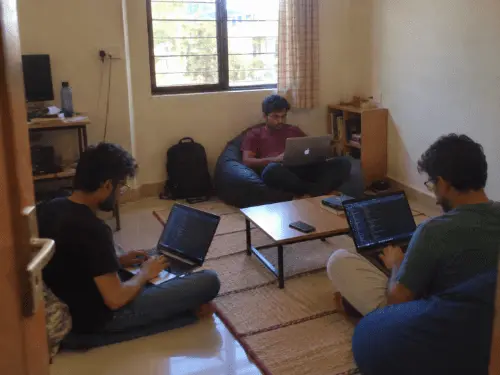
We built a trading platform for Blockoville, and did IoT and data work for 3M and Dialogues. Five early products went out. Three of those companies went on to raise money.
Our clients were happy, but we charged too little to keep going. In 2020 I chose to stop rather than stretch it thin. Covid arrived a month later.
Building data trust infrastructure
Lesson learnt
Privacy can’t be added at the end. Dhiway taught me to build it in from the start.
Later that year I joined Dhiway, and spent the next five and a half years on one problem: how to make data trustworthy and verifiable across institutions. We built India’s first tokenisation and blockchain-anchored data assurance network. In simpler terms, it lets one institution trust a record from another without having to call and verify it manually.
We worked with ONDC, Protean, EkStep and hundreds of universities, so that certificates and records could be verified and shared securely. I was also an early contributor to the Finternet initiative led by Nandan Nilekani.
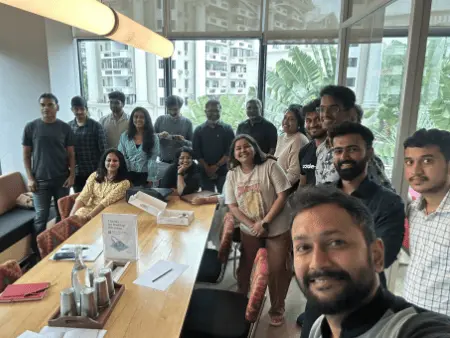
A large part of the work was about privacy: who can see a record, who has to give consent, and what happens to the data after it is shared. When India passed the DPDP Act, its data protection law, that thinking became part of how we built everything.
A question nobody could answer
Lesson learnt
What took a lifetime to build should not take a lifetime to find.
In 2025 an injury put me in hospital. When I got back home, I asked myself a question.
If something had happened to me that day, would my family have known where my savings and investments were?
The answer was no.
I spent the next two months interviewing 86 families, asking one thing: if something happened to you, could your family find and claim everything you own?
No one could say yes with confidence.
47% had shared less than half of their investments with family.
34% didn’t share anything.
19% had shared their savings and investments with family at retirement.
Most of what they had shared sat in spreadsheets and free notes apps.
“Tools that were never designed for inheritance.”
So we started UnClaimedX, to make sure families don’t lose what took a lifetime to build.

Pass Down is India’s digital inheritance and asset continuity platform: an encrypted vault where a family keeps its financial and digital details, to share while they are alive or pass down after.
Try the inheritance readiness calculator
Answer a few simple questions to find out how much of your financial life your family could actually discover and access.
CheckCopyright © 2026 Sandeep P Gaonkar | All rights reserved.